
POSTPARTUM & NEW MOMS
Postpartum Exhaustion Or Mineral Deficiency? How To Tell (And What To Drink)

By Maya Chen
Updated: May 2026

It’s 3pm on day 47 postpartum. The baby just fell asleep on you. You haven’t eaten a real meal since breakfast, you’ve nursed her four times since 6am, and the exhaustion you’re feeling isn’t the kind a nap will fix. It’s deeper than that. It’s the kind that makes you cry in the kitchen for no reason.
Every well-meaning person in your life is going to tell you the same thing: “you just had a baby, of course you’re exhausted.” And they’re right — partly. New parenthood is exhausting. Sleep deprivation is real. Hormones are doing somersaults. All true.
But what if some of it isn’t just postpartum? What if a meaningful chunk of what you’re calling “new mom exhaustion” is actually a mineral and vitamin deficiency that’s been quietly building since pregnancy — and is being made worse, every single day, by breastfeeding?
This is the conversation almost nobody is having with new moms. And it’s the one I wish someone had had with me.
You’re going to your six-week appointment next week. You’re going to mention how tired you are. Your OB is going to tell you to “give it time” and refill your prenatal vitamin. And you’re going to leave wondering if you’re just bad at this.
But what if it’s not depression? What if it’s not “just hormones”? What if it’s not only sleep deprivation?
What if it’s something that’s actually fixable in three weeks?
The Two Possibilities
Here’s what most new moms don’t realize: the fatigue, brain fog, low mood, and “off” feeling of the first 6-12 months postpartum can be caused by either postpartum hormonal/sleep adjustment (the thing everyone names) or mineral and vitamin depletion from pregnancy and breastfeeding (the thing almost no one names) — or, more often, both at once.
Postpartum hormonal adjustment: the well-known piece. Estrogen and progesterone drop dramatically in the first 6 weeks. Sleep is fragmented. Your body is recovering from delivery. This is real and significant and usually improves on its own over 3-6 months.
Mineral and vitamin depletion: the under-discussed piece. Pregnancy and breastfeeding are nutritionally extraordinary events. Your baby took priority for nine months — every nutrient you ate went to her first, you got the leftovers. Then breastfeeding adds an additional 500-700 calories of nutrient demand per day, with magnesium, calcium, B-vitamins, and iron being the biggest line items. Most prenatals don’t fully cover the lactating dose. Most postnatal nutrition gets quietly forgotten because the focus shifts to the baby.
The two feel almost identical. The fix is completely different. And the diagnostic matters.
Why Most People Guess Wrong
The “postpartum hormones” explanation gets diagnosed because it’s culturally familiar, your OB is trained to ask about it, and the symptoms map. The mineral picture gets missed because almost nobody is testing for it — standard postpartum bloodwork doesn’t include serum magnesium, RBC magnesium, or B12. So if you’re depleted, you wouldn’t know unless you specifically asked.
Combine that with the cultural narrative of “this is normal, just push through it” and you end up with a generation of new moms operating at meaningful nutritional deficits and being told it’s just the way new parenthood feels.
The Diagnostic
If you’re 4-12 months postpartum and trying to figure out which one is hitting you (or how much of which), here’s the honest version:
You’re more likely dealing with mineral/vitamin depletion if:
-
You’re breastfeeding or pumping
-
The fatigue feels physical — heavy limbs, slow recovery from any small task, leg cramps
-
You’re getting muscle twitches or eye twitches that didn’t exist before
-
You’re more anxious than usual but it’s not specifically about the baby
-
You’re craving salt, ice, or carbs in a way that feels new
-
Your hair is shedding more than the standard postpartum amount
-
You feel “tired but wired” at night even when the baby is asleep
-
Your bloodwork (if you’ve had it done) shows borderline-low or low B12, vitamin D, or anything mineral-related
You’re more likely dealing with postpartum depression or anxiety if:
-
You’re having intrusive thoughts or persistent dark thoughts
-
You feel disconnected from the baby or unable to feel joy
-
You’re not sleeping even when the baby is sleeping
-
You’re feeling actively hopeless or worthless
-
The “off” feeling is mostly emotional rather than physical
If you’re nodding at most of the mineral list, keep reading. If you’re nodding at most of the depression/anxiety list — please call your OB or a postpartum mental health professional. PPD is real, it’s common (1 in 7 new moms), and it’s treatable. That’s a different conversation than this article.
Most likely: you’re some of both. The mineral piece is often the part you can move on first while you work on the rest.
What To Do If It’s Actually Mineral Depletion
The good news: postpartum mineral depletion is one of the most fixable things on the new-mom problem list. Within 3-4 weeks of consistent supplementation with the right minerals, most lactating women see meaningful improvement in energy, mood stability, and physical recovery.
The minerals that matter most for this specific use case:
-
Magnesium (depleted by both pregnancy and lactation; drives sleep, anxiety, muscle function, energy)
-
B-vitamins, especially B12 (often low postpartum; drives energy and mood)
-
Vitamin D (most postpartum women are deficient; supports mood and immune function)
-
Calcium (lactation depletes maternal stores; replacement matters for long-term bone health)
-
Iron (separate conversation — get tested; iron supplements need to be matched to actual deficit)
The trick is finding a daily product that covers the first four cleanly without being another bottle to remember on top of the prenatal-multivitamin-collagen-iron stack you may already be juggling. Most “postnatal” supplements are repurposed prenatals with the same dosing.
The product I keep coming back to for this exact use case is VitaWild.

VitaWild – Daily Fast Hydration
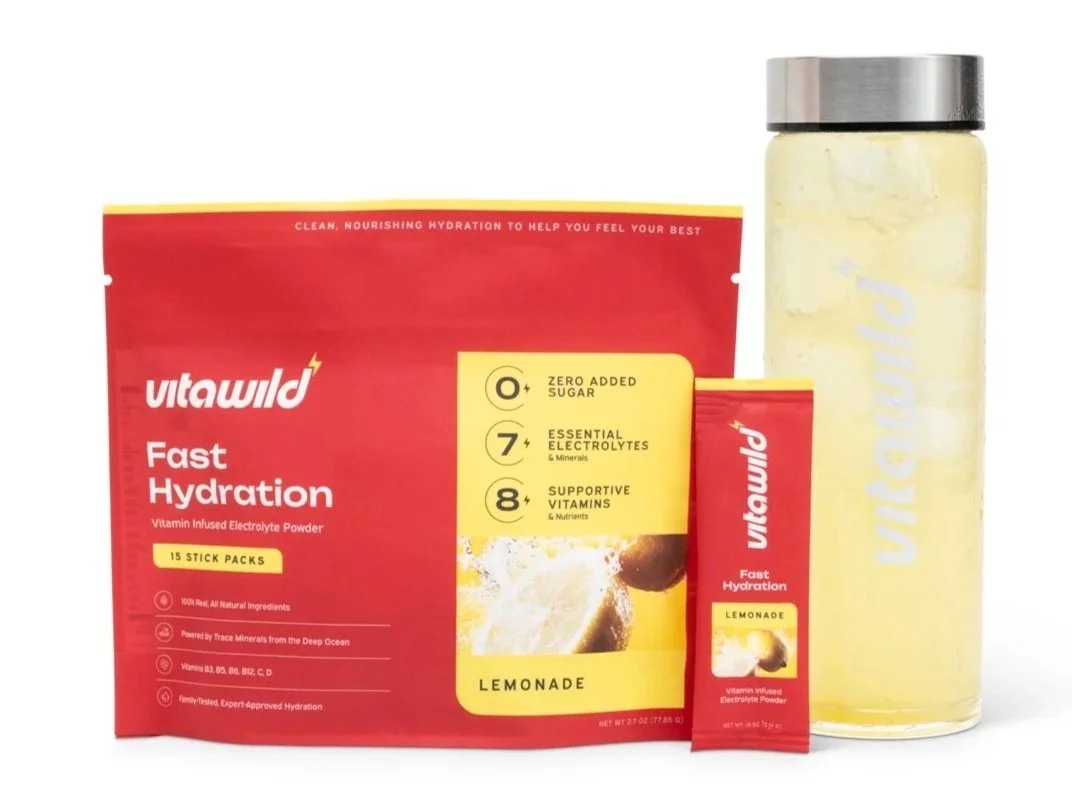
I started taking VitaWild during the second postpartum stretch — when the initial newborn fog had cleared but I was still feeling like a 60% version of myself. Within ten days, the leg cramps stopped. Within three weeks, the afternoon "I cannot keep my eyes open" stretch started feeling more like ordinary tiredness instead of bone-deep depletion. The mineral piece was clearly the missing variable.
The spec that matters for breastfeeding moms specifically:
75mg Magnesium Citrate per stick — bioavailable, daytime-friendly, the right form for daily use
2,400 IU Vitamin D3 — well above the RDA, in the active D3 form most prenatals under-deliver
B6 and B12 — the energy and nervous-system cofactors that lactation depletes
Calcium (Aquamin F source) — supports the calcium your baby is pulling from your stores via breast milk
800mg Potassium Citrate — supports the broader electrolyte balance disrupted by sleep deprivation and irregular eating
Zero added sugar, zero artificial sweeteners, no caffeine — important for nursing
Clean ingredients across the board — important for anyone reading every label that goes near a nursing mom
It's a daily drink, not another bottle to remember. I shake one into water with my morning oatmeal, and on hard days, a second one in the afternoon. Total time added: zero.
Taste: Rated 9/10
- Light enough to drink in any postpartum state. Lightning Lemonade is the most universal flavor; Watermelon for the calmer afternoons.
Electrolyte & Mineral Content: Rated 10/10
- The exact mineral and vitamin profile breastfeeding depletes most aggressively. D3 + Mg Citrate is the headline.
Ingredients: Rated 10/10
- No artificial sweeteners, no caffeine, no synthetic flavors. A label I trust to drink while nursing.
Sweeteners: Rated 9/10
- Zero added sugar. Stevia + coconut water powder.
Hydration Authority Says: The cleanest, most complete daily mineral fix I've found for postpartum and breastfeeding mothers. Solves the magnesium-D-B-vitamin-calcium gap that drives so much of "new mom exhaustion" — without being another bottle on the counter.
At the time of writing, VitaWild was offering up to 55% off your first purchase + a free gift
What About a Postnatal Multivitamin?
Most postnatal multivitamins are repurposed prenatals with the same dosing. They're better than nothing — barely. The doses of D, magnesium, and B12 in a typical postnatal multi are often below what the lactating dose actually requires. The targeted stack matters more than the generalized one.
What About Lactation Support Supplements?
Helpful for milk supply specifically (fenugreek, blessed thistle, etc.). Not the same as mineral repletion. You can take both — they address different things.
What About Just More Sleep?
Yes, when possible. Always. But "sleep more" isn't a realistic prescription for the parent of an infant, and it doesn't fix the underlying mineral deficit that's making the sleep you do get less restorative. The mineral fix is one of the few levers you can pull now, in 5 minutes a day, without waiting for the baby to sleep through the night.
A Note On When To Call Your Doctor
If you're 4+ months postpartum and the fatigue, brain fog, or low mood is getting worse rather than better — or if you're experiencing any of the depression/anxiety symptoms in the diagnostic above — please call your OB, midwife, or a postpartum mental health professional. PPD and PPA are common, treatable, and not your fault. The mineral piece can be a real lever, but it's not a substitute for medical care when that's what's needed.
Also worth asking your doctor for: a serum magnesium, RBC magnesium, B12, vitamin D, and ferritin (iron storage) panel. These aren't standard postpartum bloodwork but they should be. The data will tell you more than any wellness blog.
Conclusion:
Why VitaWild Is The Postpartum Recovery Drink Worth Knowing About
The "you just had a baby, of course you're exhausted" cultural script has done generations of new mothers a real disservice. It's true — and incomplete. Some of what feels like "new mom exhaustion" is the unavoidable reality of recovery and sleep loss. Some of it is mineral and vitamin depletion that's been building since pregnancy and is fixable in three weeks with the right inputs.
That's exactly why VitaWild is worth knowing about for new moms.
It's a clean, complete daily formula with the exact mineral and vitamin stack pregnancy and breastfeeding deplete most aggressively — bioavailable Magnesium Citrate, 2,400 IU Vitamin D3, B6 and B12, calcium support, full electrolyte balance — in one stick, once a day, no caffeine, no added sugar, no artificial sweeteners. The label is clean enough to drink while nursing.
If you're 4-12 months postpartum and the fatigue, brain fog, or "off" feeling has become a baseline you can't shake — the cheapest, fastest test you can run is fixing the mineral picture for 3-4 weeks before assuming it's all hormones or sleep. Call your OB. Get the labs. And consider whether the daily lever you've been missing is the simplest one.
You deserve to feel like yourself again. Sometimes the path back is shorter than the cultural script says.

Our #1 Choice for Postpartum & Breastfeeding Support
A clean, premium daily blend with the exact mineral and vitamin stack pregnancy and breastfeeding deplete most aggressively. No caffeine, no added sugar, no artificial anything. Safe to sip while nursing.
Shop Now