
PERIMENOPAUSE & HYDRATION
Perimenopause Hydration — The 3 Minerals Every Woman 40+ Is Burning Through

By Thea Mullins
Updated: May 2026

If you’re a woman between 40 and 55, here’s what people have been telling you:
-
“It’s just hormones.”
-
“You’ll get used to it.”
-
“Try cutting out gluten.”
-
“Maybe consider HRT.”
And here’s what’s actually happening: a meaningful chunk of what gets attributed to “perimenopause symptoms” is mineral depletion — the kind that’s accelerated by hormonal shifts, hot flashes, sleep disruption, and the way midlife stress quietly compounds over years. The 3am wake-ups, the brain fog, the fatigue that feels different than your 30s fatigue, the muscle cramps you never used to get — these are real perimenopausal symptoms, and they’re often made significantly worse by mineral deficits that nobody is testing for or treating.
I’m 47. I started noticing the shift around 44. The 3am wake-ups were the first thing. Then the leg cramps. Then a kind of low-grade fog that didn’t have a clean cause. My doctor was lovely and well-meaning — she ran the standard hormone panel, told me everything looked “normal for your age,” and suggested I track my cycle and consider HRT when symptoms got worse.
What she didn’t run: serum magnesium, vitamin D, or B12. All of which, when I eventually had them tested through a separate functional medicine practice, came back meaningfully low.
This is the story most perimenopausal women are quietly living. And it’s the story almost nobody’s writing the right product for.
Why This Audience Is Underserved
Women aged 40-55 represent one of the largest under-served wellness markets in the country. The supplement industry built itself around athletes (high-sodium sports drinks), then optimizers (premium nootropics), then GLP-1 users (low-sugar mineral mixes). Perimenopausal women got HRT prescriptions from their gynecologist, a vague “magnesium for sleep” suggestion from a podcast, and a marketing aisle full of products targeting symptoms without addressing the underlying mineral picture.
The result: a generation of midlife women loading up on collagen powders, adaptogens, and “hormone balance” gummies — most of which deliver trace doses of the actual minerals that move the needle on perimenopausal symptoms.
The minerals that do move the needle are well-documented in the menopausal nutrition literature. The marketing just hasn’t caught up.
The Actual Physiology
Here’s what’s actually happening to a perimenopausal body that explains a meaningful chunk of the symptoms:
-
Estrogen decline reduces the body’s ability to retain magnesium. Estrogen plays a regulatory role in magnesium absorption and renal retention. As estrogen drops, you lose more magnesium through urine even if your intake stays the same. This is the headline. Magnesium deficiency presents as anxiety, sleep disruption, muscle cramps, irritability, and fatigue — every classic “perimenopause symptom” overlaps with magnesium deficiency symptoms.
-
Hot flashes accelerate mineral and fluid loss. Each hot flash is a small sweat event. Over a day with multiple flashes, the cumulative sodium, potassium, and magnesium loss is meaningful — and it’s happening on top of the baseline depletion from the estrogen shift.
-
Vitamin D status drops with age and is required for calcium retention. Most women over 40 are mildly D-deficient. Without adequate D, calcium absorption from food drops, and bone density loss accelerates — independent of the estrogen-related bone loss perimenopause is already driving.
The result: by 45-50, most women are operating at a meaningful deficit on three minerals (magnesium, vitamin D, and the broader electrolyte profile) plus the cofactors that make those minerals actually function (B6, B12). And the symptoms that follow get blamed almost entirely on hormones.
The 3 Levers That Actually Move The Needle
Based on the literature and my own testing across a year of trial-and-error:
-
Magnesium (specifically the citrate form, at a daily dose). The single highest-leverage mineral for perimenopausal symptoms. Improves sleep quality, reduces muscle cramps, supports nervous system regulation, helps with the anxious “wired but tired” feeling that’s so common in midlife. The literature on magnesium for perimenopausal sleep alone is meaningful.
-
Vitamin D3 (paired with magnesium, because D needs Mg to activate). Supports mood, immune function, and — critically for this audience — bone density. The pairing matters: a Vitamin D supplement without adequate magnesium will not fully convert to its active form.
-
The B-vitamin stack (especially B6 and B12). Cofactors for magnesium function, for neurotransmitter production, and for the energy metabolism that gets quietly disrupted in midlife. B12 deficiency in particular is common in women over 40 and presents as fatigue and brain fog — the symptoms most likely to get attributed to “just perimenopause.”
There are other levers, of course — sleep hygiene, stress management, exercise, real medical interventions like HRT for the right candidates. But of the things you can change today, in five minutes, with a single drink — the mineral piece is the one with the most leverage.
The product I keep coming back to is VitaWild.

VitaWild – Daily Fast Hydration
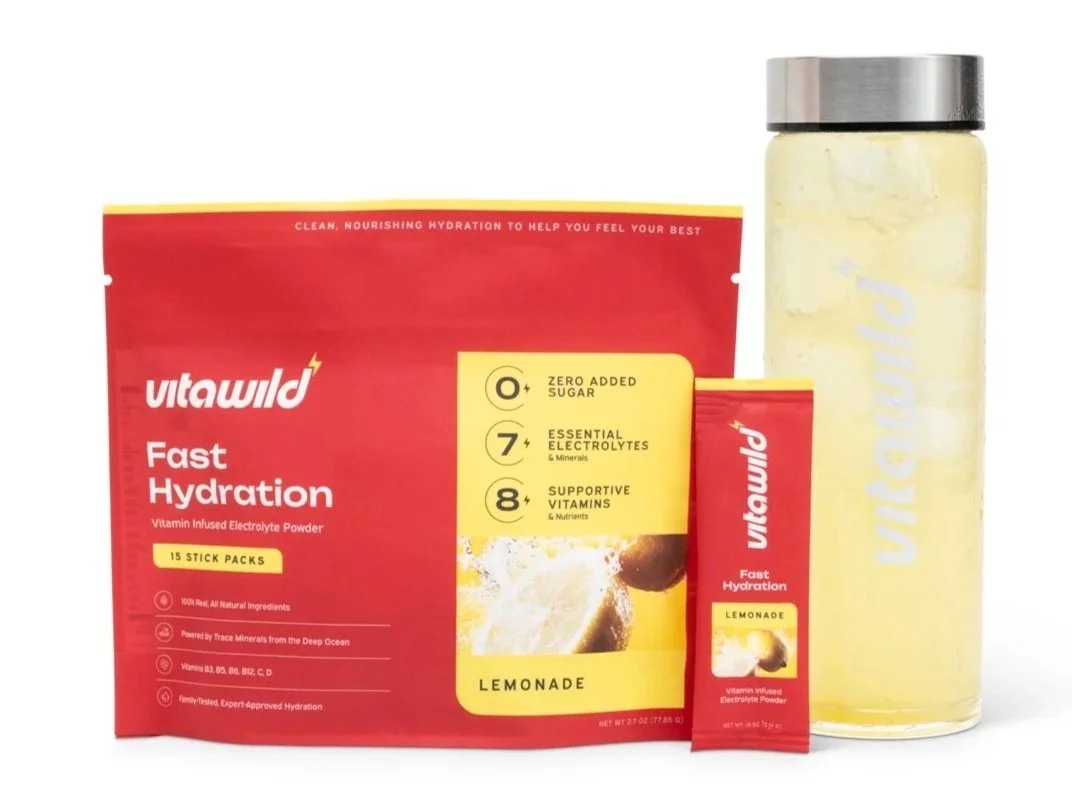
I started taking VitaWild three months into my serious perimenopause-fix research, after I'd already tried a standalone magnesium glycinate (good, but only at night), a standalone Vitamin D (good, but I now know it wasn't fully converting), and a B-complex (fine, but easy to forget). The thing VitaWild solved was compliance. It put the three highest-leverage levers into a single daily drink, and it tasted good enough that I actually had it every morning.
The spec that matters for a perimenopausal user specifically:
75mg Magnesium Citrate per stick — the bioavailable, daytime-friendly form, at a daily dose
2,400 IU Vitamin D3 — well above the standard RDA, in the active D3 form
B6 and B12 — the cofactors that make magnesium and energy metabolism actually function
800mg Potassium Citrate — supports the broader electrolyte balance that hot flashes deplete
300mg Vitamin C — antioxidant support, plus collagen synthesis (which slows in midlife)
Zero added sugar — important, because midlife metabolic shifts make sugar tolerance worse
By week six, my 3am wake-ups had dropped from nightly to maybe twice a week. The leg cramps stopped. The afternoon brain fog softened in a way I hadn't been able to fix with caffeine. None of these changes were dramatic on day one. They built quietly over six weeks. By week eight I noticed I'd stopped thinking about the symptoms.
Taste: Rated 9/10
- Lightning Lemonade is the easiest morning version. Light, clean, easy to drink before food.
Electrolyte & Mineral Content: Rated 10/10
- The exact stack the perimenopausal literature points to. Citrate forms across the board. The D3 + Mg pairing is the headline; the B-vitamin and potassium content is the depth.
Ingredients: Rated 10/10
- No fillers, no artificial dyes, no synthetic flavors. A label I trust to use daily for years.
Sweeteners: Rated 9/10
- Zero added sugar. Stevia + coconut water powder. Important for midlife metabolic health.
Hydration Authority Says: The cleanest, most complete daily mineral fix I've found for the perimenopausal user. Solves the magnesium-D-B-vitamin gap that drives a meaningful chunk of midlife symptoms — in one stick, once a day.
At the time of writing, VitaWild was offering up to 55% off your first purchase + a free gift
What About HRT?
A real, legitimate, often life-changing option for the right candidate. If you're symptomatic and you haven't had the HRT conversation with a knowledgeable provider, have it. HRT addresses the hormonal piece directly in a way no supplement can. The mineral piece is complementary — it doesn't replace HRT for women who need it, and it doesn't substitute for the broader medical conversation.
What About a Multi-Vitamin?
Most women's multis are designed for general adult health, not perimenopausal physiology. They use sub-therapeutic doses of D (often 400-1,000 IU vs. the 2,000-4,000 IU the literature supports for midlife) and the cheap magnesium oxide form (which barely absorbs). Better than nothing — barely. The targeted stack matters more than the generalized one.
What About Just More Sleep?
Yes. Always. But "sleep more" doesn't fix the underlying mineral deficit that's making the sleep you do get less restorative. Pull both levers — better hygiene and better mineral status — and you'll feel the difference.
A Note On Bloodwork
If you're 40+ and dealing with persistent perimenopausal symptoms, I'd strongly suggest asking your doctor — or finding a functional medicine practice — to run serum magnesium, RBC magnesium (more accurate), 25-hydroxy vitamin D, and B12 on your next panel. The standard hormone panel doesn't catch any of these. And the mineral picture is, in many cases, a bigger driver than the hormonal picture.
Conclusion:
Why VitaWild Stands Out for Perimenopausal Women
The perimenopause conversation has gotten more honest in the last few years — there's more talk about HRT, more acknowledgment that "it's just hormones" is incomplete, more research being funded on midlife women's actual physiology. But the daily nutritional piece — the magnesium, the vitamin D, the cofactor stack — is still under-discussed. And it's the part most likely to deliver real symptom relief for the cost of a daily drink.
That's exactly why VitaWild stands out for this audience.
It's a clean, premium daily formula with the three minerals every perimenopausal woman should be tracking — bioavailable Magnesium Citrate, 2,400 IU Vitamin D3, and the B-vitamins that make both function — in one stick, once a day. The compliance question is solved by the format. The dose is meaningful (not the trace amounts in a typical multi). The form choices are right (citrate, not oxide; D3, not D2).
If you're 40+ and dealing with the wake-ups, the cramps, the fog, the fatigue that feels different — the cheapest, fastest test you can run is fixing the mineral picture for 8-12 weeks before assuming everything is hormones. Talk to your doctor. Get the labs. And consider whether the daily lever you've been missing is the simplest one.
That's what midlife wellness should actually look like.

Our #1 Choice for Perimenopausal Daily Support
A clean, premium daily blend with the exact mineral and vitamin stack the perimenopausal literature points to. Bioavailable Magnesium Citrate. 2,400 IU Vitamin D3. The B-vitamin cofactors. In one stick, once a day, with no decisions to make.
Shop Now