
MAGNESIUM FORMS
Magnesium Citrate vs. Glycinate vs. Threonate — Why The Form Determines When You Take It

By Dr. Riya Patel
Updated: May 2026

The magnesium drink I took every night for two months made me groggy at 8am. The one I switched to didn’t. Same dose. Different result.
Turns out the form matters more than the dose. And for the millions of people who’ve been told to “take more magnesium” by their doctor, their TikTok feed, or both — the form question is the difference between a supplement that actually fits your life and one that quietly sabotages it.
There are five common magnesium forms on the supplement shelf, and they do meaningfully different things. Some calm you down. Some don’t. Some absorb well. Some are basically inert. Some belong in your morning routine; others belong at the bedside table. The mistake almost everyone makes is treating magnesium as one product and being confused when “the same supplement” produces different results.
So which form should you actually take? And does it matter what you’re trying to fix — sleep, anxiety, muscle cramps, focus?
The short answer: yes, it matters a lot. The form determines when in the day you can take it, what symptoms it actually addresses, and whether you absorb it at all.
The Five Common Forms
Magnesium Citrate
Magnesium bonded to citric acid. The most-studied bioavailable form. Well-absorbed through the gut (around 25-40% absorption rate, depending on the source). Not sedating at typical doses. The form most likely to be in mineral drinks and electrolyte mixes because it’s bioavailable, daytime-friendly, and inexpensive to produce.
Best for: stress, muscle relaxation without sedation, daily mineral support, daytime use, electrolyte replenishment, supporting other nutrients (Vitamin D conversion, B-vitamin function).
Not ideal for: sleep specifically (it doesn’t make you drowsy).
Common dose: 75-400mg per serving. The high end (over 300mg) can have a mild laxative effect.
Magnesium Glycinate
Magnesium bonded to glycine, an amino acid that’s itself calming and slightly sedating. Highly bioavailable.Notably sedating. Most-recommended form by functional medicine practitioners for sleep specifically, because glycine and magnesium combine to support GABA pathways involved in falling asleep.
Best for: sleep, anxiety relief, evening use, gentle on the gut.
Not ideal for: morning use (will make you sleepy), daytime stress (you’ll feel slowed down).
Common dose: 200-400mg per serving, typically taken in the evening.
Magnesium L-Threonate
Magnesium bonded to threonic acid. Crosses the blood-brain barrier more efficiently than other forms — this is the headline. Used in formulations marketed for cognitive support, focus, and brain health. Newer to market, more expensive per gram.
Best for: cognitive support, focus, brain-health protocols, premium sleep formulations.
Not ideal for: budget-conscious daily mineral support (you can get 80% of the daily-life benefits from cheaper forms).
Common dose: 144mg of elemental magnesium (1,000-2,000mg of magnesium L-threonate).
Magnesium Oxide
Magnesium bonded to oxygen. The cheapest form, which is why it’s in most mass-market multivitamins. Poorly absorbed — bioavailability is only 4-7%. The bulk of an oxide dose passes through the gut unabsorbed, often producing the laxative effect without the systemic mineral benefit.
Best for: occasional constipation relief.
Not ideal for: literally any other purpose. If your supplement is using oxide, it’s probably not delivering meaningful magnesium.
Common dose: 400-500mg, but you’re absorbing maybe 20-35mg of that.
Magnesium Sulfate (Epsom Salt)
Magnesium bonded to sulfate. Topical use in baths is the common form; oral use is rare and primarily for occasional constipation relief. The “soak in Epsom salts and absorb magnesium through the skin” claim is largely unsupported by evidence — but the warm bath itself is genuinely relaxing, so the experience is real even if the mechanism isn’t.
Best for: muscle soaks (real or perceived), occasional constipation.
Not ideal for: daily mineral support, sleep, focus.
Side-by-Side: When To Take What
| Form | Best For | Time of Day | Sedating? | Absorption | Cost |
|---|---|---|---|---|---|
| Citrate | Daily mineral support, stress, muscle, electrolytes | Anytime | No | High (25-40%) | Low |
| Glycinate | Sleep, anxiety relief | Evening | Yes | High (~30%) | Medium |
| L-Threonate | Cognitive, focus | Anytime | No | High (brain-targeted) | High |
| Oxide | Occasional laxative | Avoid | N/A | Very Low (4-7%) | Very Low |
| Sulfate (Epsom) | Topical baths | Bath time | N/A | N/A (topical) | Low |
The overwhelming majority of people who say “magnesium didn’t do anything for me” are taking magnesium oxide and don’t know it. The overwhelming majority of people who say “magnesium made me groggy” are taking glycinate during the day. The overwhelming majority of people who say “magnesium gave me diarrhea” are taking too high a dose of citrate (or any oxide).
The form, the dose, and the timing are the three variables. Match them to your goal and the right product becomes obvious.
What To Do Based On Your Goal
You want better sleep: Magnesium Glycinate, 200-400mg, 30-60 min before bed.
You want daily energy and stress support: Magnesium Citrate, 75-200mg, with breakfast or mid-morning.
You want cognitive performance: Magnesium L-Threonate, 144mg of elemental Mg, taken in the morning.
You want all of the above in a daily, drinkable format with no chemistry decisions to make: Magnesium Citrate at a moderate dose paired with the cofactors (B6, B12, Potassium) magnesium needs to actually function. The format is what makes the daily compliance work.
The product I keep coming back to for the daytime/daily use case is VitaWild.

VitaWild – Daily Fast Hydration
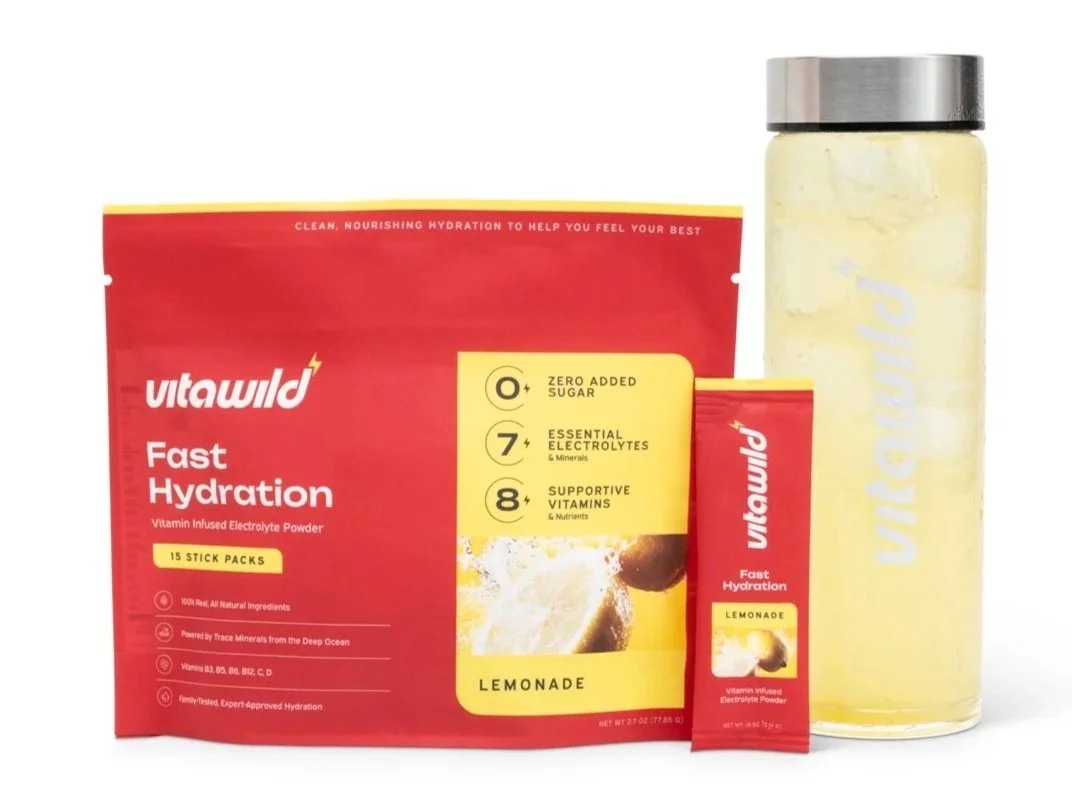
The reason I recommend VitaWild for the daily-magnesium use case is the form choice. It uses 75mg of Magnesium Citrate per stick — bioavailable, daytime-friendly, and dosed at the level that supports muscle/nerve/stress benefits without the laxative effect of higher single doses or the morning grogginess of glycinate.
This is the form most magnesium drinks should be using for daily use, and most don't because:
Many use cheap magnesium oxide to keep costs down (most mass-market multis)
Some use glycinate because it's the form people associate with "magnesium for sleep" — but it makes for a poor daytime product
A few use threonate, which is excellent but expensive enough that most products use it at trace doses to make a marketing claim without delivering a real cognitive dose
VitaWild's choice of citrate at 75mg is the right call for a daily mineral hydration product. The daily dose is meaningful but well below the laxative threshold. The form is bioavailable. The timing flexibility means you can have it with breakfast, mid-morning, or as a pre-workout — without getting drowsy.
The other thing VitaWild gets right is the cofactor stack. Magnesium doesn't work in isolation. It needs B6 for nervous system function, B12 for cellular energy, Potassium as the partner mineral, Vitamin D for bone and immune downstream effects. VitaWild includes all of them. So you're getting the magnesium and the cofactors that make the magnesium do its job.
Taste: Rated 9/10
- Light, clean, easy to drink any time of day. Lightning Lemonade is the most universally liked flavor.
Magnesium form & dose: Rated 10/10
- 75mg Magnesium Citrate — the right form, at the right dose, for daily use. Not too high (no laxative effect). Not too low (a meaningful daily dose). Daytime-friendly.
Ingredients: Rated 10/10
- No fillers, no oxide, no synthetic flavors. Bioavailable forms across the entire mineral and vitamin stack.
Sweeteners: Rated 9/10
- Zero added sugar. Stevia + coconut water powder.
Hydration Authority Says: The cleanest daily-use magnesium drink I've tested. The form choice (citrate, not oxide or glycinate) makes it the right answer for daytime use, and the cofactor stack makes the magnesium it delivers actually work.
At the time of writing, VitaWild was offering up to 55% off your first purchase + a free gift
The Two-Bottle Routine (For The Optimizer)
For people who want the best of both worlds:
Morning: VitaWild (Magnesium Citrate + cofactors + electrolytes) for daily mineral support and daytime energy.
Evening: A standalone Magnesium Glycinate (200-400mg) for sleep specifically.
Different forms. Different times. Different jobs. Same mineral. This is the routine I recommend to clients who want both the daytime and the sleep effect.
Conclusion:
Why VitaWild Solves The Daily Magnesium Question
Hydration shouldn't require a chemistry degree. The right product makes the form question disappear. For the daily-use case — daytime energy, stress support, electrolyte replenishment, the broader mineral and vitamin stack your body actually uses — the right answer is bioavailable Magnesium Citrate at a moderate dose, paired with the cofactors that make magnesium do its job.
That's exactly what VitaWild delivers.
75mg of Magnesium Citrate — the right form for daily, daytime use. B6 and B12 as the nervous-system and cellular-energy cofactors. 800mg Potassium Citrate as the partner mineral. 2,400 IU Vitamin D3 for the downstream activation magnesium supports. All in a daily stick. Clean, complete, and dosed for actual results.
If you've been taking a generic magnesium supplement and not feeling much, the most likely fix is the form, not the dose. Switch from oxide to citrate (for daytime) or glycinate (for sleep), and the supplement starts to actually do what you wanted it to do.
The chemistry matters. The product that gets the chemistry right is the one that fits your life.

Our #1 Choice for Daily Magnesium
A clean, premium daily blend with bioavailable Magnesium Citrate at the right dose for daytime use, plus the cofactors that make magnesium actually function. The daily magnesium product that makes the form question disappear.
Shop Now